H. G. Dietz
http://aggregate.org/hankd/
Department of Electrical and Computer Engineering
Center for Visualization & Virtual Environments
University of Kentucky, Lexington, KY 40506-0046
Original April 28, 2020, Latest Update June 15, 2023
The opinions expressed in this document are those of Hank Dietz speaking for himself personally, not as a Professor at the University of Kentucky.
I've always liked the idea of electric vehicles. My first real experience was in the mid 1970s, when my Dad and I modified my soap-box derby car, which was styled like a 1910 Mercer Raceabout, to be powered by the starter motor from a 1965 Ford Mustang. The belt drive didn't gear-down the motor speed enough, and I remember getting up to truly scary speeds driving it on the then-empty airfield at Mitchel Field. Later, my Dad's company built a not-for-road-use utility vehicle with a similar styling. It was available as gas, gas with electric start, and electric versions, and the electric one was displayed at IEEE Electro 77 as an example of an exceptionally efficient electric vehicle -- the trick was, it had a clutch and 5-speed transmission for its 1HP electric motor... Here is a little bit about that car we built in 1977; that page was put together for the senior project team that I supervised in the 2022-2023 conversion of the last gas with electric start version to modern Lithium-powered electric. Here's a photo of it:
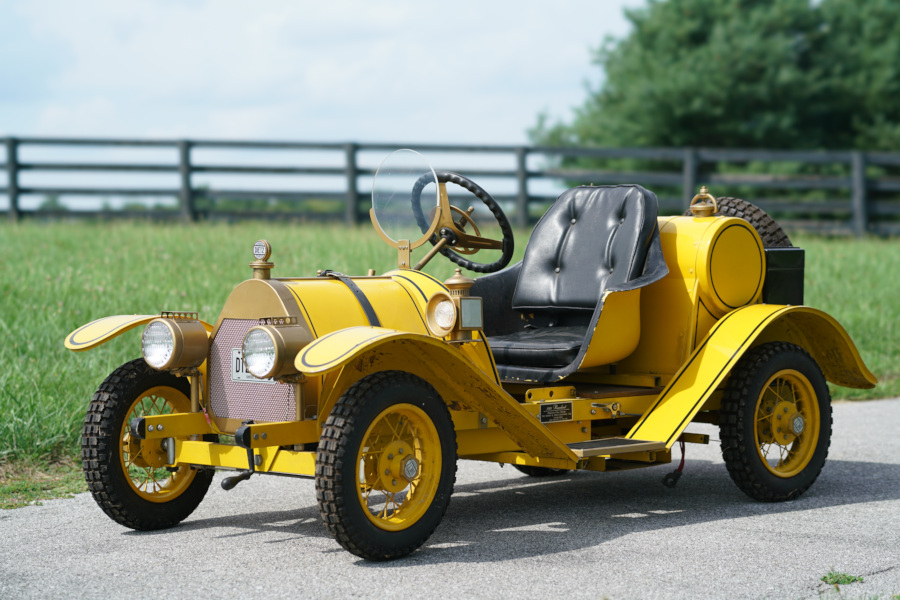
It might be the cutest little tractor ever made. ;-)
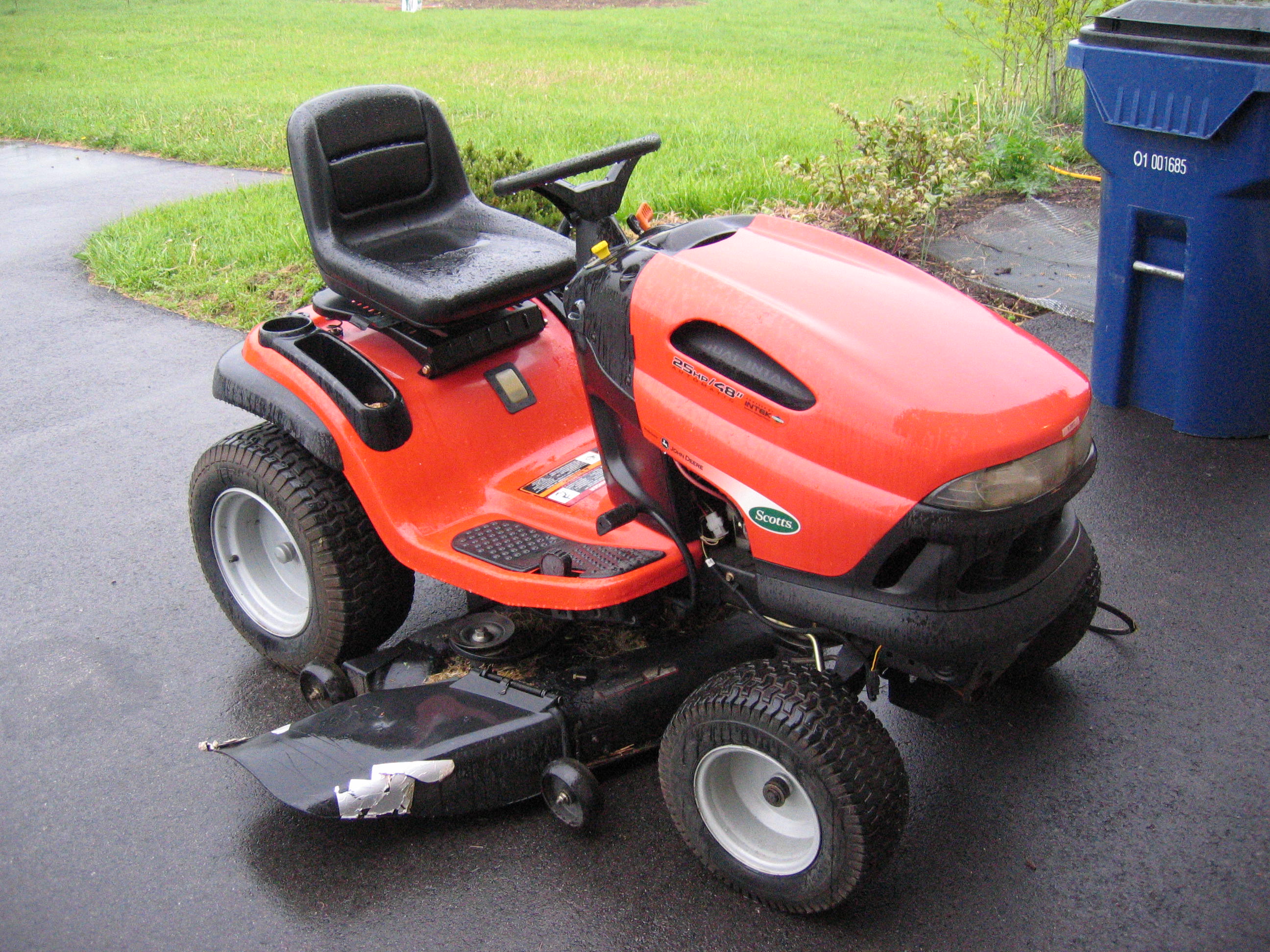
Anyway, in 2001 I moved to a house on a 10-acre lot in Lexington, KY. I never had more than 1/4 acre of yard before, and this 10-acre rough field quickly proved to be a challenge. We started by having a commercial mowing company "knock the grass down" to 6" every couple of weeks, but they were neither very good nor very cheap. So, I bought a 48" "Scotts by John Deere" riding mower to take the grass down to 4" or so... and soon after, I was actually mowing everything with that. It was challenging to say the least, although I have to admit that having the optional bagger did give me a way of collecting tons of grass mulch in minutes.
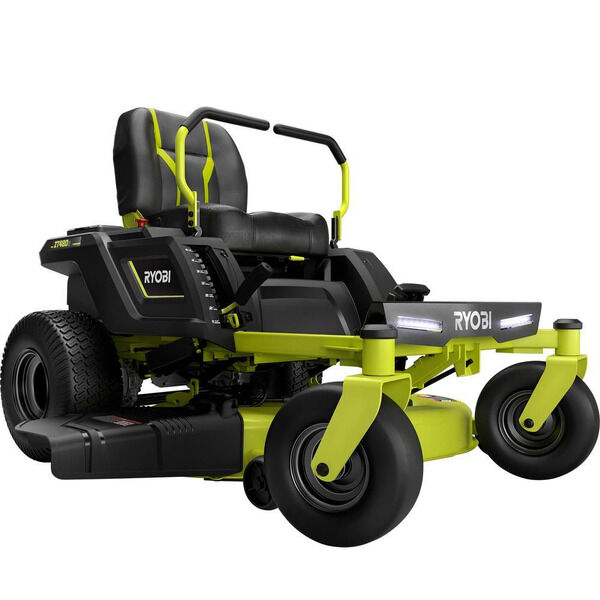
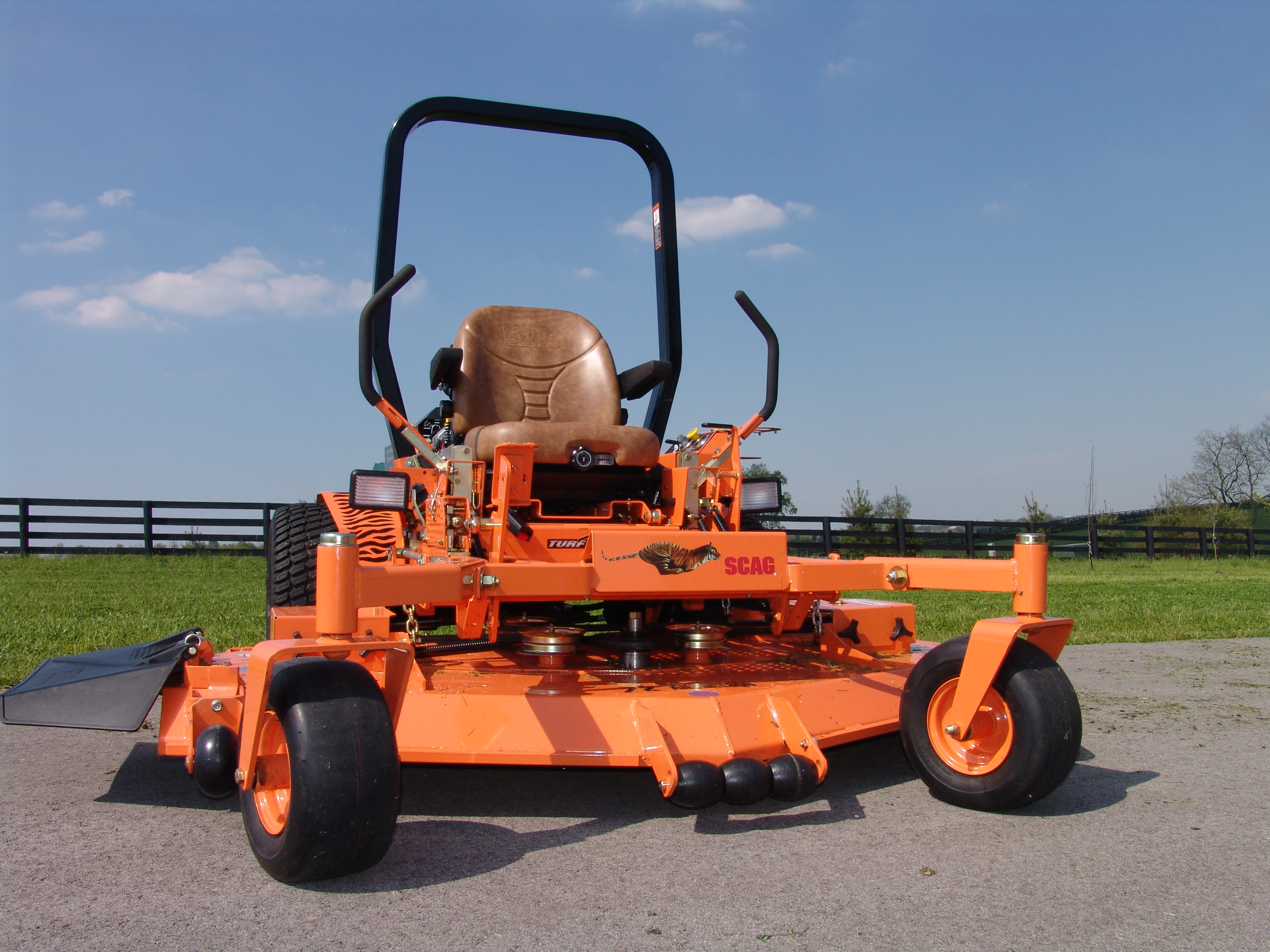
Clearly, I needed a bigger mower. After having a few come for trial runs, I decided on a 72" Scag Turf Tiger. It's a monster, but it did the job... so I eventually sold the 48" tractor. However, the Scag isn't great at towing things and maintenance service is slow (presumably lower priority than folks using Scags for commercial mowing businesses), so I bought another John Deere -- this time, a 54". That wasn't a bad combo, but as COVID-19 hit the USA, both my tractors needed servicing. I had been thinking about building or buying an electric tractor for twenty years, so I looked again to see if there was a viable electric replacement. Honestly, Mean Green makes what could be a great replacement of the Scag: the lithium-powered EVO-74" ZTR... but they're not really around here and the tractor isn't cheap. So, I looked more toward an electric that could replace the 54" rather than the 72". That's how I ended-up buying my 42" Ryobi, which is powered by four 100AH deep-cycle batteries. However, the journey hasn't stopped there; I now have a Lymow robot mower too...
So, let's see if we can answer the question: are electric mowers really viable yet for properties with multiple acres of less-than-perfect lawn?
One big table can summarize a lot:
| Property | 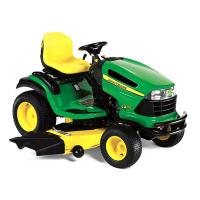 |
 |
 |
 |
|---|---|---|---|---|
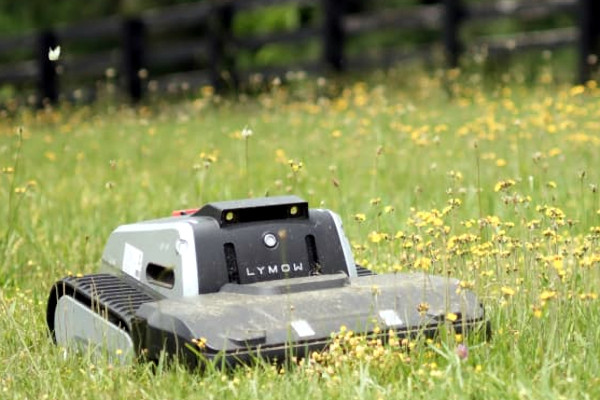
| Model | John Deere LA175 | Lymow One Plus | Ryobi RY48ZTR100 | Scag 72" Turf Tiger |
| Price (new) | $2,800 | $3,000 | $4,200 | $12,000 |
| Run Cost/Acre | $2-3 | $1-2 | $1-2 | $3-5 |
| Deck Width | 54" | 16" | 42" | 72" |
| Travel Speed | 5 MPH | 2.2 MPH (1m/s) | 7 MPH | 12 MPH |
| Cut Speed (in use) | 2 MPH | 2.2 MPH (1m/s) | 5 MPH | 5 MPH |
| Max Acres/Day | ~4 | 1.75 (as spec) | ~5 | ~8 |
| Max Deck Height | 4" | 3.9" (100mm) | 4.5" | 6" |
| Tall Grass & Weeds | Cuts, but can Clog & Stall | Nothing heavy | Mulching no, Discharge yes | Cake |
| Twigs | Unhappy | Usually skips, but can jam | Very unhappy | You call that a tree? |
| Turn Behavior | Large radius | Zero radius, very gentle | Zero radius | Zero radius kills turf |
| Ride | Tall, but stable | A tank, but you don't ride it | Bumpy, can slide | Like a tank |
| Noise | Engine+deck == earplugs | Deck only, inobtrusive | Deck only, can talk over | Engine+deck > earplugs |
| Cuttings go where? | On lawn, often clumps | Don't even see them | On lawn, as they should | On you & everywhere |
| Towing stuff? | You feel it | Not an option | No problem | Works, but not intended |
| Safety? | Interlocks and stable | Smart interlocks | Interlocks,original tires slide | Belt and rollbar |
As I write this, all three tractors are fully working, and in the past week I have done hours of mowing with each. They're all ok. So here's the summary:
So, is the Ryobi electric a viable answer?
The answer is mostly yes. The "bursty" mowing style my Scag nudges me towards really isn't the best approach. Things look better doing the incremental cutting that the Ryobi inspires, and mowing is more pleasant in shorter doses with less noise and mess. Not having to deal with gas and belts is also a big win. I also have to give the Ryobi high marks as a farm utility vehicle, because it really works well for light towing.
The "no" part of the "mostly yes" answer has to do with the ability to convert a rough field into what looks like a trimmed lawn. The Ryobi is a lawn mower, and it doesn't deal as well with cutting non-lawn stuff -- weeds are ok (and the 4.5" max cut height helps), but it doesn't like twigs. If I run over a small branch with the Scag, there's nothing left but mulch. The John Deere mowing a twig makes some unhappy sounds, and twig pieces will survive the mowing, but there's really no harm done. The Ryobi doesn't do much to twigs, and in wet or really heavy mowing will need to have the discharge path cleared regularly. So, for acres like mine, the Ryobi alone isn't really sufficient; arguably, it plus a bush cutter would suffice, but using the Scag for rough cuts and Ryobi for frequent cuts seems to make the most sense.
Finally, it's worth saying a bit about safety. The Ryobi is certainly the inherently safest of the three to operate, but it really doesn't feel all that safe. The safety belt on the Scag feels like overkill, and I can't imagine what it would take to need the Scag's rollbar (other than power-flipping it by catching the rollbar on some overhead structure -- don't ask). However, the Ryobi bounces around a lot, and a safety belt would be a reasonable addition (the John Deere should have one too). The Ryobi's sliding potential also means I have to be very careful on slopes near my two ponds -- that, plus the fact the deck doesn't stick out the sides as much as on the other tractors, means I keep a little extra distance from most obstructions and can't cut under obstacles like fences. The John Deere's center of gravity is much higher, but the weight is evenly distributed between the engine up front and you in the back, while the Ryobi has the batteries under you with no weight up front -- it feels like you could pop a wheelie under the right circumstances. The Ryobi is also fast, and I can imagine it would be a little too responsive for someone not used to zero turns (e.g., it was for my wife); Ryobi does have a lower-speed mode for inexperienced operators.
So, electric mowers are pretty viable... as long as your property doesn't have lots of rough areas and slopes. Acres of grass, even tall grass with weeds, are not a problem. The original sealed lead acid batteries (without balancing cicuit) and the original tires were both poor choices, but after I upgraded to 100AH LiFePO4 and got meaner tires, there's really nothing bad about the Ryobi other than the fact that they don't make them like that anymore. They briefly made a 54" version of the model I have, and it had space for a larger battery as well as a constructed deck, but that was discontinued and as of 2026 they don't sell any mowers bigger than 42". There are a lot of consumer electric zero-turn mowers now up to 60", but they take expensive custom Lithium-Ion batteries and don't have any more capacity than the 5kWH currently in my Ryobi. Commercial units with bigger batteries start around $18,000.
What about the Lymow? Well, it can't handle everything. In fact, it's really not able to handle anything that doesn't already look like a lawn somebody has been caring for. However, within that constraint, the Lymow can maintain up to about 3 acres as long as you don't have a week of solid rain. Within a week of decent weather, it will be able to cut everything within 3 acres roughly three times -- which is about what you need it to do given the low height it cuts to.
Farther down this page you'll find more detailed discussion of the Ryobi and the Lymow.
All three of my tractors have tires go flat regularly. Why? Ossage orange trees. Many of those twigs I was talking about have tire-killing spikes on them. I know there are now airless tractor tires, and I thought those should be the standard tires... until I looked at Tweel prices. They're running an order of magnitude higher price. That's insane. Let's hope that the industry soon realizes that airless tires should be the low-cost, high-volume, norm for slow-moving off-road vehicles.
Oddly enough, this little Ryobi has become my primary mower. Here are some updates...
Well, I've now had the Ryobi roughly one and a half years (two peak-growth seasons), so it seems time to post an update. It's been used a lot, probably close to 200 charge/cut cycles, partly because it is so pleasant to use but also because I've been home a lot due to the pandemic and it encourages incrementally cutting because the battery cannot do 10 acres in one cycle. When new, it did 1-2 acress per charge, and that's still about right. Disturbingly, if the Ryobi has been sitting for a week or longer (on charge), the battery indicator often will say 70% rather than the 100% it shows when it's only been on charge overnight, but it seems to get about the same run time either way.
The Ryobi continues to cut well as long as the grass/weeds being cut are dry -- wet grass clogs the side chute quicky, often requiring manual removal of the clog. I'm now on my 3rd set of blades; they don't dull, but they do get bent when they hit nasty things like 2" thick twigs. There's also a little chunk taken out of the blade mount on the left blade -- it doesn't seem unsafe, but I think this should be replaced, so I might need to get it serviced. It's not fun, but I had no problems changing the blades myself and have never had the tractor professionally serviced.
Overall, if you only have 1-2 acres of lawn, this Ryobi would handle it effortlessly. For my 10 acres, I find myself using it on the lawn-like ~4 acres nearest the house and closer to the road, but resorting to the Scag to knock-down the field-of-weeds remainder of the property.
The original batteries have gotten down to cutting about 1/3-1/2 acre, just 20-30 minutes, before refusing to spin the blades. Full charge is usually reading 70%, but it actually hits 100% if I don't have it sitting on charge for too long. In any case, it's time to do something about the batteries.
Step one was getting a new charger, this HTRC one, which is capable of charging the LiFePO4 batteries if I switch to them. However, it also has an SLA battery repair cycle, so I tried that first on the original AGM SLA batteries. To do that, I needed to fix a little issue with the charger's RXV plug not fitting the Ryobi socket. This could be done either by breaking some plastic tabs in the Ryobi socket or by swapping the connectors between the Ryobi charger and the HTRC. The swap was easy, but here's a photo of the connectors and socket:
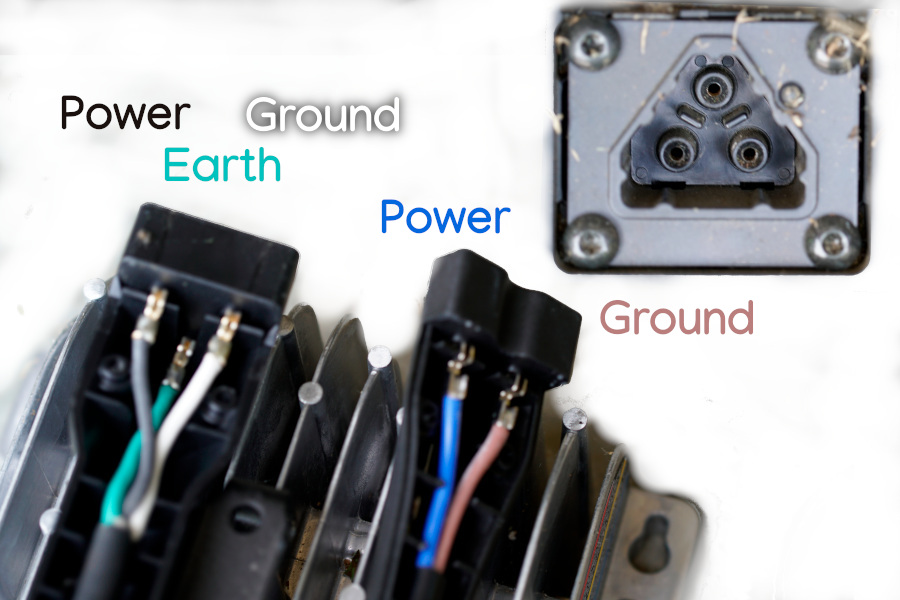
The original charger had black, white, and green wires while the HTRC had just blue and brown with an unconnected pin in the third position. Well, blue is the new black, brown is the new white, and I left out the unconnected pin because I didn't want to risk it rattling into a short inside the connector. The missing green (earth) connection seems to be harmless, although I've seen it suggested that a 3300ohm 1W resistor from that pin to ground might be a good idea (to cause the green charging light on the socket to light when charging), but that seems a bit arbitrary. The really interesting thing is that the guy who suggested it has the exact opposite wire color code of what my HTRC charger has! He has the resistor to the 3rd pin connected to what is the brown wire in my connector (but is blue in his)... we agree that pin should be ground.
After that connector swap, I raw a repair cycle that took about 24 hours to complete. Then I ran a regular charging cycle, which did not complete by itself in 12 hours (with the batteries somewhat warm it had dropped from 13A to 8A charging), but the Ryobi showed 100% charge after. Mowing with it I cut perhaps 2/3 acre in about 40 minutes without fully draining the battery, and I put it back on charge. The next charge cycle also failed to stop itself. Then I cut a very rough 1/8 acre and put it on charge -- this time, it quickly charged and stopped itself as "FUL."
I'll update this as appropriate. It looks to me like the batteries are now getting better formed, but are not quite where they should be yet. Thus, I've just run another repair cycle, which again took 24 hours. It's not as close to good as new as I'd like, but an upgrade to LiFePO4 batteries seems premature. I'll probably wait until next year, and see if there are any bigger, better, alternatives then. I do think LiFePO4 batteries make more sense than the other Lithium chemistries being used in most electric mowers; certainly, LiFePO4 offers the best battery life with the lowest cost and greatest safety.
I upgraded to a CHINS Bluetooth LiFePO4 Battery Smart 48V 100AH in August 2023. This battery is able to deliver as much as 500A peak, and the BMS keeps everything nicely balanced. Back then, the battery cost $1,450. As of 2026, it costs $770! I'm very happy with it.
The LiFePO4-powered Ryobi has become the workhorse for my property. Since January 2024, I've even been using it as a snow plow with a Brinly-Hardy Front Mount Snow Plow for RYOBI Electric Zero-Turn Mowers Store (SKU #1010177326 from Home Depot). It was a huge pain to attach the mount for it, but the blade goes on/off the mount with just two pinned bars. It works very well with ordinary snow, and can push loose dirt, but nothing the resists more.
In September 2025 I added a $100 PPOLB 48" Tow-Behind Dethatcher with 24 Spring Steel Tines. This is not a fun thing to assemble; each tine is a separate piece to attach. However, it works about as well as the one I used to use with the old John Deere tractor (which rusted and had the wheels fall apart). I don't use it very often.
In October 2025, I finally replaced the rear tires with Marastar Turf Traction 18x8.50-8 purchased via Amazon. Quite a bargain at less than $60 per tire. It was a pain to do the swap, so I brought the wheels to a local farm equipment dealer and had them do the tire swap. These tires entirely change the handling of the Ryobi, and much for the better! It no longer slips and it has resisted punctures. These tires even worked well when plowing snow.
In sum, the Ryobi really is serving as a light-duty farm tractor. The battery is still lasting 2-3 acres of not-very-easy mowing per charge, and it can surprisingly well bring down reeds that are 8' tall. I have to plow into them forward and then reverse for about six feet to cut the stalks, but it is easy to do that and frankly, the Scag can't do that as well. I wouldn't have thought the stamped deck of the Ryobi could handle that, and I have had to knock a dent out of it once, but it is hard to image a fabricated deck doing much better. The cut quality of the Ryobi is poorer than the Scag for anything resembling a lawn, but it's hard to complain.
Overall, I think this is currently a 4/5 and has the potential to evolve into a 5/5 with a little tweaking by Lymow.
I've had my Lymow One Plus for close to two months, although I'm still waiting for the spare blades I ordered at the same time. Set up was quick and easy. My property is 10 acres including some slopes, treed areas, and two ponds -- I knew the Lymow couldn't handle all of that, but I have been able to have it maintain about 3 acres around and in front of my house (as long as we don't have a run of rainy days). Slopes are no problem for the unit and position accuracy is shockingly precise.
The Lymow has two "real" cutting blades, not tiny razor blades. However. wet grass clogs it very quickly, and dry grass did too until I removed the rubber flap on the discharge. A clearer discharge path would really help. I clear grass clumps using a plastic putty knife. As needed, I also use an electric air duster to clear the dirt from the top and the gap behind the front bumper.
The occasional tall weed bends without being cut and also can make the vision system think it sees an obstacle when the headlights light it up.
Occasionally the blades stop in the middle of mowing a line, but then come back on at the end of the line. I don't know why and there's no indication of any problem in the app, but it can result in uncut portions of lines.
There are areas where small twigs frequently fall from trees, which doesn't cause much trouble unless the twig is just the right size to jam in the mower (which has happened twice), but my zero turn mowers (72" Scag Turf Tiger and 42" Ryobi converted to 100AH LiFePO4) can pulverize those twigs. I do not recommend using the Lymow where twigs commonly fall on the ground.
My dock happens to get direct sunlight at dusk at which time the dock QR codes become too bright for the vision system to recognize; literally casting a shadow on them fixes the problem. It also ocassionally has trouble docking when things are wet, sometimes docking but failing to recognize that it is charging; perhaps a moisture sensor issue?
The app is pretty good, but has a variety of features not yet implemented. I would say it is usable, but still a work in progress. There are some silly design choices. For example, I wanted to mark off a no-mow area, and it let me walk it through the whole process before telling me it wasn't valid because it isn't within a mowing area. Well, it would have been, but I happened to try to define the no-mow area before a mowing area that would contain it.
On a property the size of mine, it can take a while to go between the dock and the area being cut. I don't know what algorithm it uses to pick the routes, but it doesn't always take the most obvious route. Related to that, I would have no problem with it crossing my driveway anywhere, but the app only lets me define narrow paths for crossing; there is a work-around: define the driveway as a mowable area that I never pick to mow.
In the longer term, I would love to see Lymow offer a scaled-up version of this unit that could handle 3-5 acres per day. I understand that a bigger battery would take longer to charge, but that would waste less prime mowing time. With the current hardware, I think the key would be more effective mowing at night. The main night mowing issue I see is detecting when the grass is covered in dew; the vision system also doesn't work well with the headlights at night.
 The only thing set in stone is our name.